

What Is Seborrheic Keratosis — and Why Do People Remove Raised Brown Spots?
Seborrheic keratoses (SKs) are common benign raised brown skin growths that often appear as we age. They typically look waxy, rough, raised, or “stuck on”, and can show up on the face, chest, back, neck, scalp, and body. Many people describe them as raised brown spots, rough age spots, or dry patches that seem attached to the skin.
While seborrheic keratoses are not dangerous, they can become itchy, irritated, flaky, or catch on clothing, necklaces, bras, and shaving areas. Others simply want them removed because they stand out cosmetically, especially on the face, chest, or neckline.
At Cascade Medical Spa in Portland, we use precision Ellman RF technology to safely remove seborrheic keratoses and raised brown spots with minimal trauma, fast healing, and little to no visible scarring — without harsh freezing or surgical excision.
Seborrheic Keratosis & Raised Brown Spot Removal Results 3 Weeks After (healing process is going great)
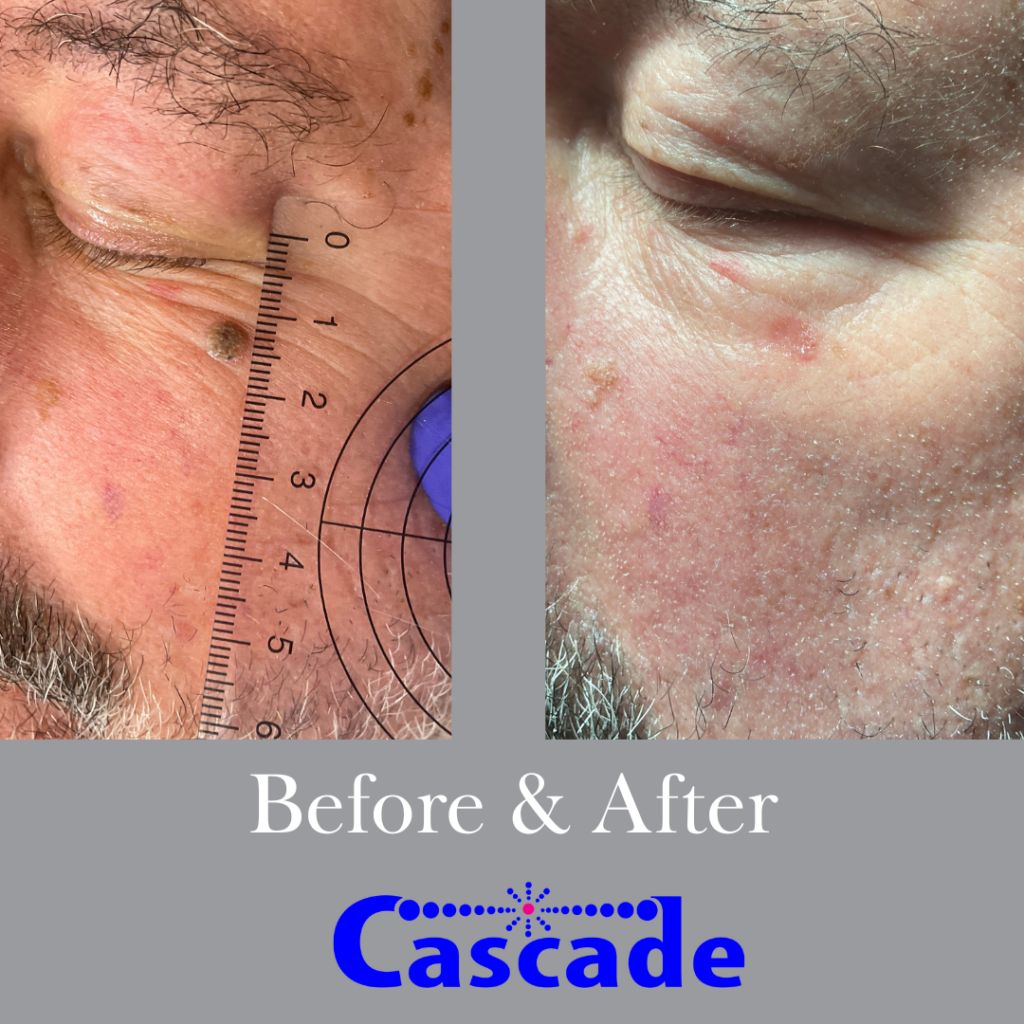
How Our Seborrheic Keratosis Removal Works (No Freezing, No Burning, No Guesswork)
At Cascade, we don’t use liquid nitrogen or harsh acids. Instead, we use Ellman RF — a cutting-edge radiofrequency technology that lets us remove seborrheic keratoses precisely and gently, with minimal damage to the surrounding skin.
This isn’t your average “burn it off and hope for the best” approach.
Here’s how it works:
-
We apply a local anesthetic to keep you completely comfortable
-
The Ellman RF device targets the lesion with pinpoint accuracy
-
It vaporizes the growth layer by layer, without cutting or scarring
-
Most clients are in and out in under 30 minutes
The result? Clearer, smoother skin with faster healing and virtually no visible trace left behind.
Whether it’s on your face, chest, or scalp, our method is designed to be effective, cosmetic-friendly, and tailored to your skin — not one-size-fits-all.
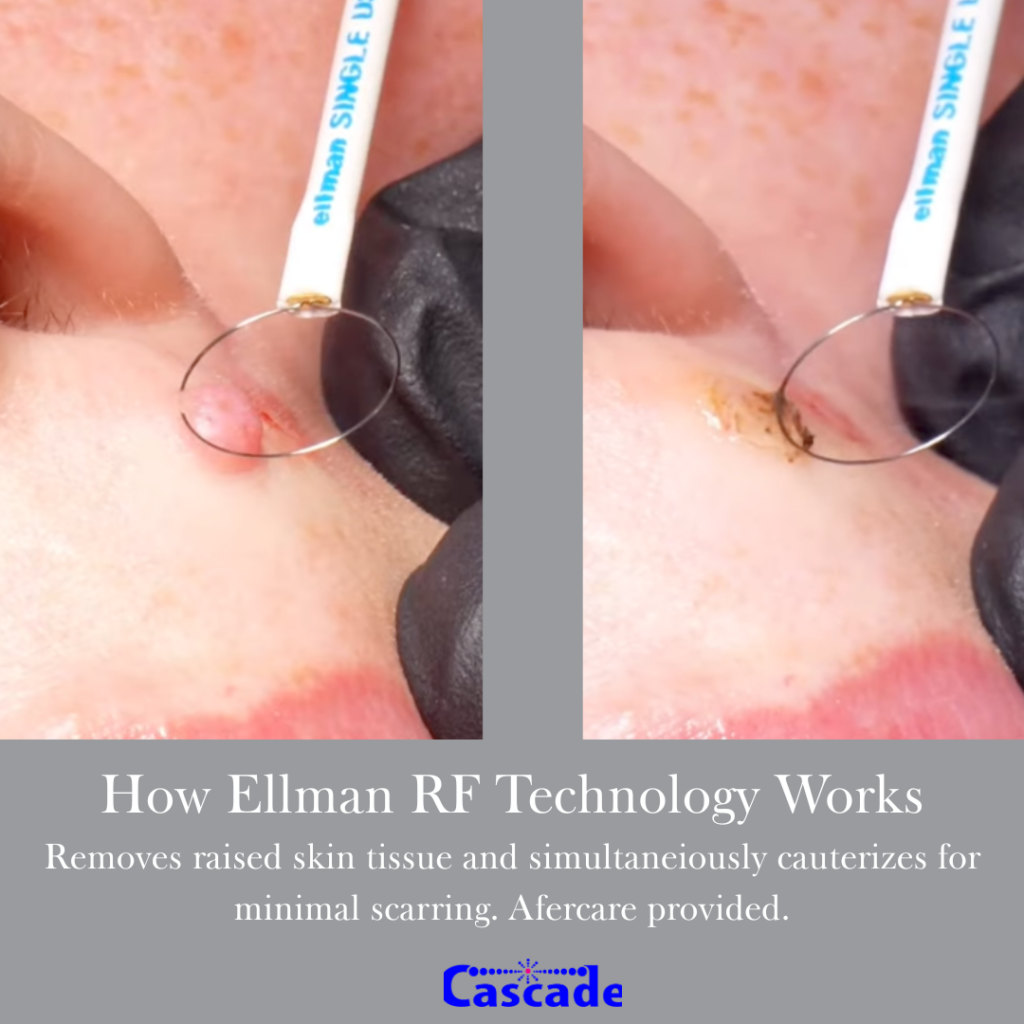
What to Expect After Your SK Removal Appointment
One of the biggest advantages of removing seborrheic keratoses with Ellman RF is how simple and easy the recovery is.
Here’s what the process looks like:
-
No stitches, no downtime — most people return to work or daily activities the same day
-
You may notice a tiny scab or pink spot where the growth was — that’s part of the normal healing
-
Over the next 7–14 days, the area smooths out and blends naturally with your skin tone
-
We’ll provide clear aftercare instructions to help minimize any chance of irritation or discoloration
Most importantly, there’s no harsh scarring, no aggressive burning, and no long-term skin damage — just a smoother, more even-looking result.
Have more than one spot? We can usually treat multiple growths in a single session.
FAQ’s Seborrheic Keratosis
What is the best way to get rid of seborrheic keratosis?
The best way to remove seborrheic keratosis is with professional in-office removal using Ellman RF technology. This advanced radiofrequency method allows us to precisely treat the raised lesion while minimizing damage to the surrounding skin. At Cascade Medical Spa, Ellman RF is one of our preferred options because it is fast, highly targeted, and ideal for cosmetic removal with minimal downtime.
What causes seborrheic keratosis to develop?
Seborrheic keratosis is most commonly caused by aging, genetics, and cumulative sun exposure. These benign growths are very common and tend to appear more often over time. They are not contagious and are not caused by poor hygiene.
What happens if seborrheic keratosis is left untreated?
Seborrheic keratosis is usually harmless and can safely be left alone. However, many spots become thicker, rougher, itchy, irritated, or catch on clothing, which is why many patients choose removal. If a lesion changes quickly, bleeds easily, or no longer looks like a typical SK, it should be evaluated by a provider.
Is it okay to scratch off seborrheic keratosis?
No. Trying to scratch, peel, or pick off seborrheic keratosis at home can cause bleeding, infection, irritation, and unnecessary scarring. It can also leave behind uneven pigment changes. Professional removal with Ellman RF is much safer and gives a cleaner cosmetic result.
Can 3% hydrogen peroxide remove seborrheic keratosis?
Standard 3% household hydrogen peroxide is usually not strong enough to safely remove seborrheic keratosis. The only FDA-approved peroxide treatment used a much stronger 40% in-office solution, not the same as store-bought peroxide. For predictable cosmetic results, Ellman RF removal is typically more precise and effective for raised SK lesions.